
Is Your Bridging Finance Exit Strategy Actually An Exit Strategy or Tick Box at Outset?
A bridging loan can solve an urgent funding problem, but the exit strategy is what decides whether the short-term solution becomes a successful long-term outcome.
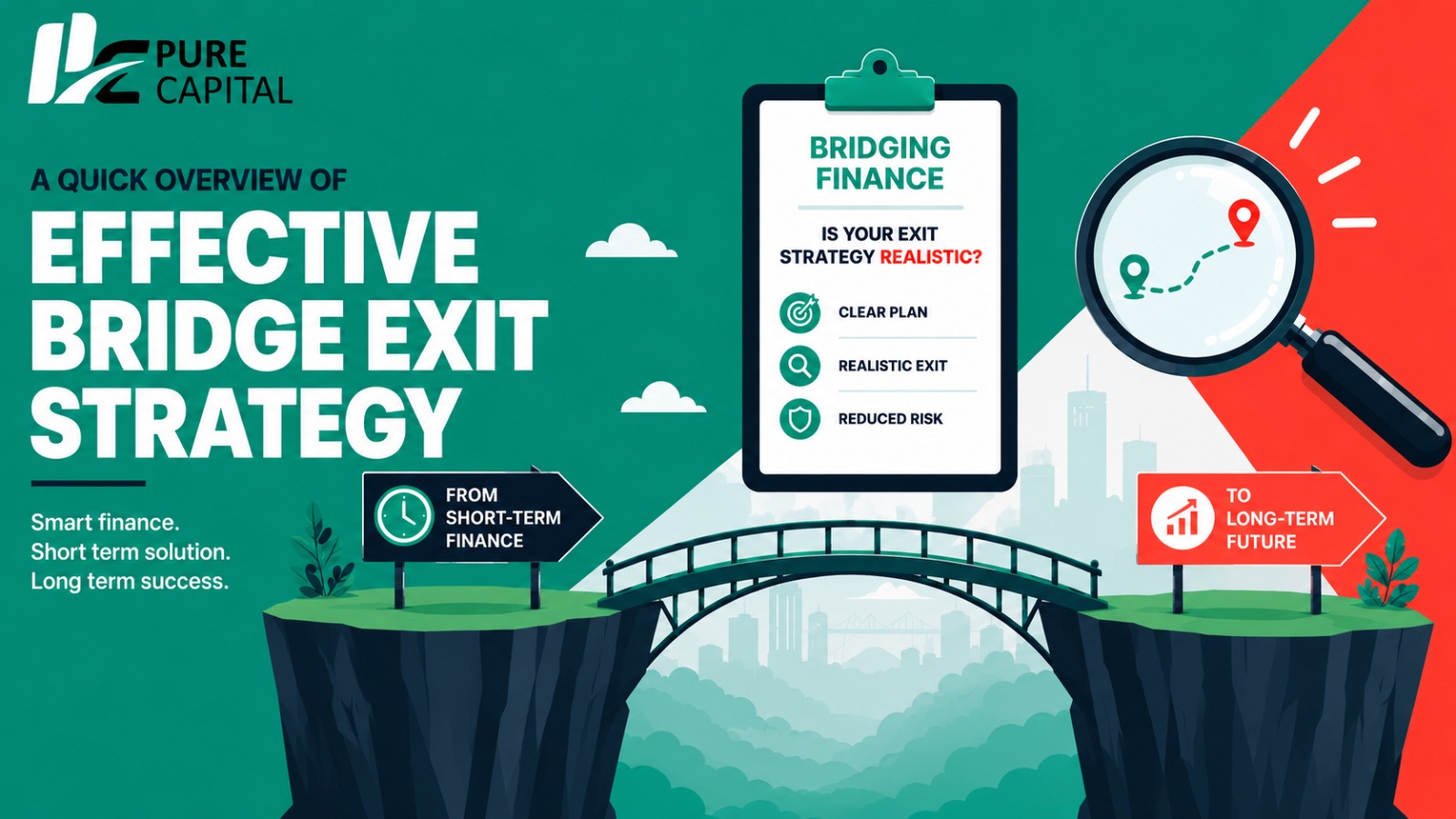
One thing I've noticed over the years is that borrowers rarely struggle to explain why they need bridging finance. The reason is usually quite straightforward. There may be a property purchase that needs to complete quickly, an auction opportunity that cannot be missed, or a project that requires short-term funding before longer-term arrangements can be put in place.
What often receives less attention, however, is the exit strategy.
Yet in many cases, the success of a bridging transaction depends less on how quickly funds are released and more on how realistic the repayment strategy is from the outset. It's a topic that comes up regularly in conversations with borrowers, investors and property professionals alike. Everyone focuses on getting onto the bridge. Far fewer spend the same amount of time considering what happens when they reach the other side.
That is why, in my view, the most important question in bridging finance isn't always how to secure the loan. It's how you intend to exit it.
When people first enquire about bridging finance, the conversation usually begins with urgency. Time is short, and conventional lending may not move quickly enough. In these situations, bridging finance can be an invaluable tool. Yet one of the biggest mistakes borrowers make is focusing solely on getting the bridge approved.
The speed of approval, the interest rate, and the amount that can be borrowed often dominate the conversation. In bridging finance, the proposed route of repayment is not simply a detail of the application. It is one of the foundations upon which the entire transaction rests.
Bridging Finance Is Designed to Be Temporary
Unlike a traditional mortgage, bridging finance is intended to provide short-term funding. The purpose is to create a financial bridge between where you are today and where you need to be in the future.
That future point may be:
- Selling a property
- Refinancing onto a residential mortgage
- Refinancing onto a buy-to-let mortgage
- Completing a refurbishment project before refinancing
- Releasing funds from another asset
Whatever the route, lenders will want to understand how the borrowing is expected to be repaid at the end of the term. Borrowers should approach this question with the same level of importance. After all, securing the loan is only the first step. Successfully exiting it is what ultimately determines whether the transaction achieves its objective.
A Bridging Loan Should Start With the Exit, Not the Entry
Many borrowers assume that if a lender is willing to provide bridging finance, the proposed exit strategy must automatically be viable. In practice, circumstances do not always unfold as expected.
Property values can change. Circumstances can evolve. Mortgage criteria can differ significantly between lenders. What appears achievable at the start may become more complicated as time passes.
This is why experienced advisers often spend as much time discussing the exit as they do discussing the bridge itself. A well-considered exit strategy requires looking beyond today's requirement and considering what happens six, nine, or twelve months down the line.
Questions such as these become critical:
- Will the borrower meet affordability requirements for the intended refinance?
- Will the property's condition meet future lender criteria?
- Is the anticipated property value realistic?
- Is there enough contingency if timelines change?
- Are there alternative exit routes available if circumstances shift?
These conversations may not be the most exciting part of the process, but they can be among the most important.
The Value of Working With a Regulated Adviser
Depending on the circumstances, borrowers may encounter different types of professionals when seeking bridging finance. Some may introduce borrowers to lenders or specialist funding sources, while others may be authorised and regulated to provide advice on mortgage and related lending solutions.
The value of professional advice often lies in taking a broader view of the borrowing journey. Rather than focusing solely on arranging short-term finance, an adviser can help borrowers consider how today's decision may affect tomorrow's options. This wider perspective can be particularly valuable when the intended exit involves refinancing onto another lending product.
A bridge without a realistic exit strategy can become expensive. Extension fees, additional interest, and unexpected delays can all increase costs and create pressure. A carefully considered exit strategy can help identify and manage potential risks before they arise.
Looking Beyond the Immediate Need
One of the reasons bridging finance has become increasingly popular is its flexibility. It can solve problems that conventional lending cannot.
But flexibility should never be mistaken for simplicity.
The strongest bridging cases are often not those with the fastest approvals or the largest loan amounts. They are the cases where every stage of the transaction has been carefully considered from the outset. Many experienced property investors understand this principle well. Before they think about entering a deal, they think about how they will leave it.
The same mindset can benefit any borrower considering bridging finance.
The Most Important Question
When discussing a bridging loan, many borrowers ask: "How quickly can the funds be released?"
It is a reasonable question.
But there is another question that deserves equal attention.
"What is my exit strategy, and how confident am I that it can be achieved?"
Bridging finance is designed to solve a short-term funding requirement. A realistic and well-considered exit strategy can play an important role in helping borrowers achieve their intended objective.
Bridging finance may not be suitable for everyone. The availability of finance and future refinancing options will depend on individual circumstances, lender criteria, and property suitability. Seeking professional advice can help borrowers understand the options available and the risks involved.
"The most important question in bridging finance isn't always how to secure the loan. It is how you intend to exit it."
Mortgage and finance advice should always be based on your personal circumstances, objectives and lender criteria. The information in this article is general guidance only and should not be treated as a personal recommendation.
Pure Capital Limited is authorised and regulated by the Financial Conduct Authority, Firm Reference Number 957322. We are a Credit Broker and NOT a lender. Registered in England & Wales No. 13383125.